Cooking for one changes the rhythm of the kitchen.
There’s no one asking what’s for dinner. No need to coordinate timing or preferences. No pressure to make things impressive or elaborate.
But there’s also no one else to share the moment with, and that can quietly shift how a meal feels.
Letting Go of the Performance
When I first started cooking just for myself, I noticed how easy it was to treat meals as an afterthought.
Something quick.
Something standing up.
Something eaten while distracted.
It wasn’t intentional. It just felt unnecessary to do more.
Over time, I realized the loneliness wasn’t about eating alone, it was about skipping the care that usually came with cooking for someone else.
Cooking as a Conversation
Soup helped change that.
Soup doesn’t rush you. It asks for a pot, a little time, and some attention. It fills the kitchen with sound and smell. It gives you something to check on, even if no one else is around.
Cooking soup for one feels less like preparing food and more like keeping company … with yourself.
Making Enough to Matter
I still make too much soup.
Not because I need the quantity, but because abundance changes the feeling of the meal. It turns cooking into an act that extends beyond a single sitting.
There’s comfort in knowing tomorrow’s meal is already waiting. It feels less like eating alone and more like being taken care of.
The Bowl Still Counts
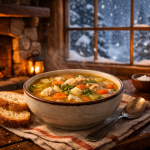
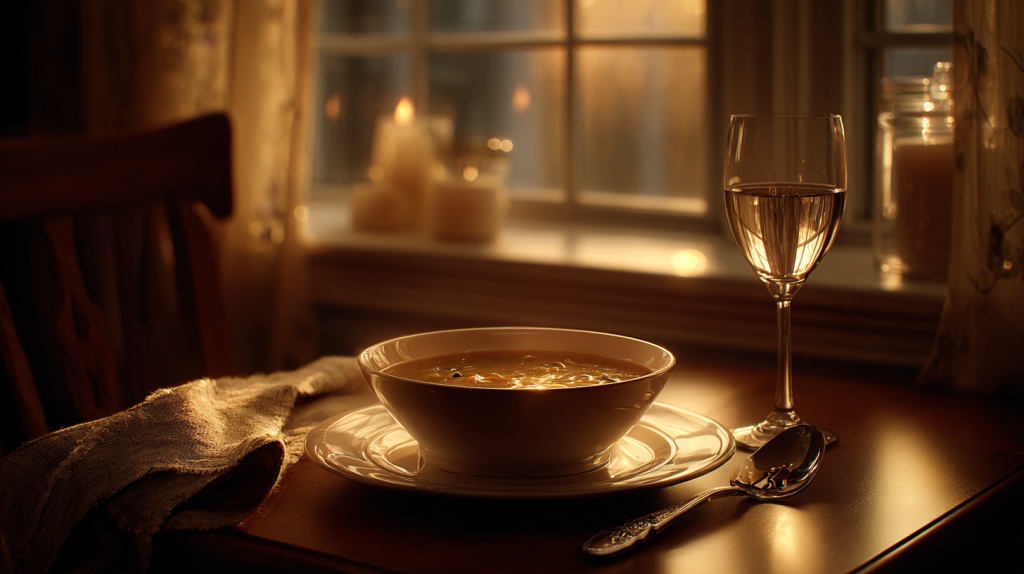
I use a real bowl.
I sit down.
I eat slowly.
Those small choices matter more when you’re cooking for one. They turn eating into a moment instead of a task.
Soup helps with that. It asks you to hold the bowl. To notice the warmth. To pause between spoonfuls.
A Different Kind of Togetherness
Cooking for one doesn’t have to feel lonely.
It can feel intentional.
Grounded.
Quietly complete.
Soup reminds me that a meal doesn’t need an audience to matter — it just needs presence.
And sometimes, that’s enough.
Mostly soup. Sometimes sandwiches. Always comfort.