There was a time when I thought I should care more about the difference between stock and broth.
I read about it. I nodded along. I understood the theory — bones versus meat, gelatin, clarity, depth. All good information. All true.
And then I went back to making soup the way I always had.
What I Reach for Most Days
Most of the time, I use what’s available.
Sometimes that’s:
- a carton of store-bought chicken broth
- homemade stock I froze months ago and forgot about
- something in between, labeled vaguely and doing its best
And honestly? It almost always works out just fine.
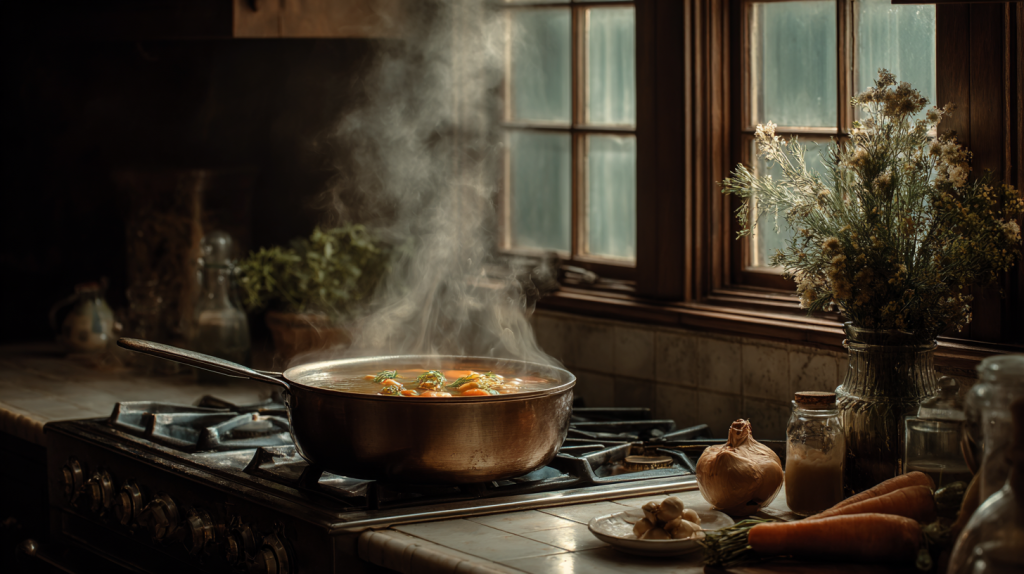
Once the vegetables soften, the chicken simmers, and everything has time to come together, the soup becomes its own thing. The liquid stops being the star and starts being the stage.
The Soup Does the Heavy Lifting
Good soup isn’t built on one perfect ingredient. It’s built on layers.
A little salt.
A little time.
A gentle simmer.
A taste, then another.
Stock and broth matter — but not nearly as much as patience and attention. I’ve made good soup with fancy homemade stock and I’ve made good soup with a box I grabbed without thinking about it.
The difference was rarely dramatic.
When I Do Make Stock
When I make stock, it’s usually accidental.
Leftover bones.
A quiet afternoon.
Nothing else demanding attention.
I don’t treat it like a project. I let it simmer while I do other things. If it turns out rich and golden, great. If it’s lighter, that’s fine too. It’ll still become soup.
Letting Go of the Rules
Overthinking stock used to slow me down. It made soup feel like something I needed to prepare for, instead of something I could just start.
Once I stopped worrying about doing it “right,” I made soup more often. And that felt like the better trade.
Good soup doesn’t come from perfection.
It comes from showing up, starting the pot, and letting it take its time.
Mostly soup. Sometimes sandwiches. Always comfort.